The five things that fail a Virginia inspection most
Most inspection failures come from ordinary wear: lights, tires, brakes, wipers, and safety equipment. Learn what to check before your visit.
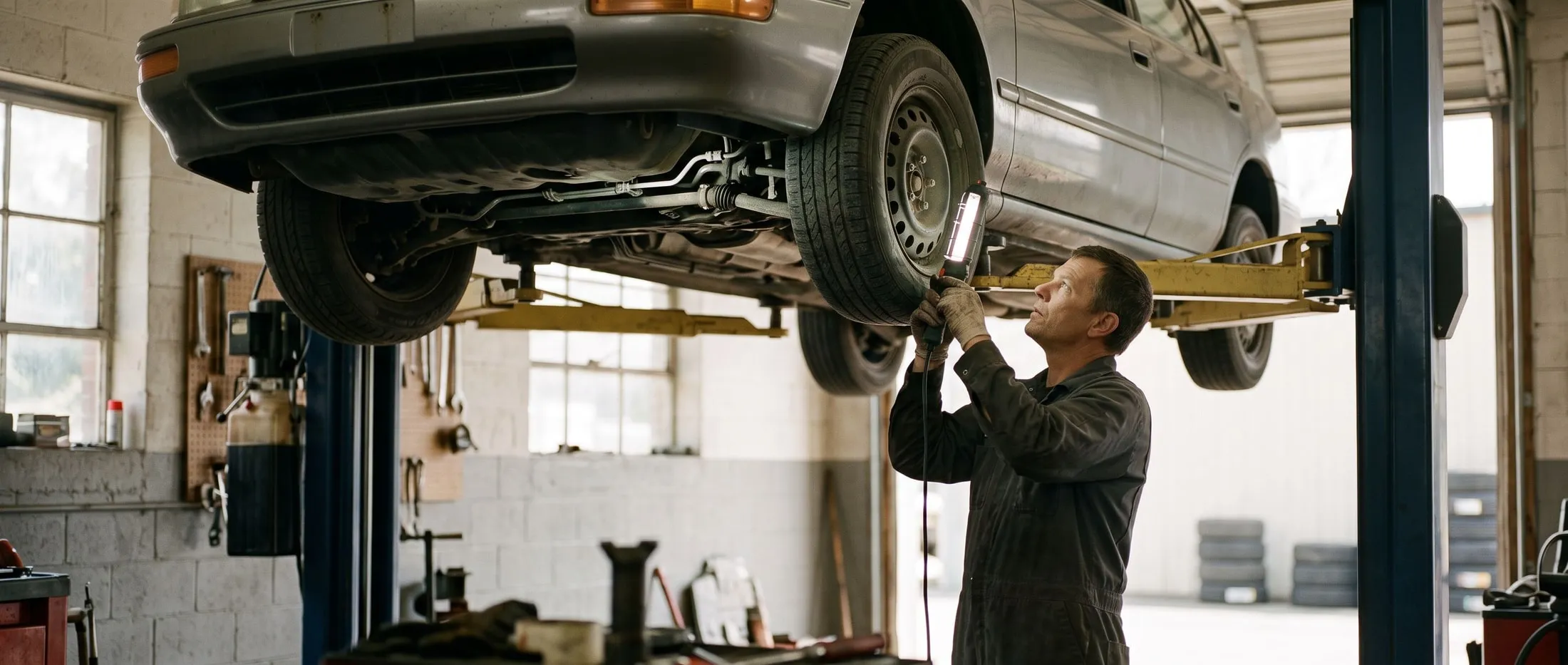
An inspection failure is usually less mysterious than it feels. It means a required item did not meet the inspection standard on the day it was checked. A useful pre-inspection walk-around can catch ordinary wear early, but it cannot replace the station’s inspection or a repair diagnosis when something is wrong.
Exterior lights that work only sometimes
Ask someone to operate the brake pedal, turn signals, hazard lamps, reverse lamps, and headlights while you walk around the vehicle. Look for a lamp that is dimmer than its mate, a lens with standing water, or a signal that flashes unusually quickly. Those clues can point to a failed bulb, connection, housing, or circuit, and an intermittent light is still a problem even if it happens to work in the driveway.
Check the license-plate lamps too. They are easy to miss because they are not in a normal forward walk-around. Do not tape over a cracked lens or assume a recently replaced bulb solves a repeated outage; moisture or a loose socket may be the actual issue.
Tires, wheels, and the contact patch
Turn the steering wheel and inspect both front tires from the outside and inside edge as far as you can safely see. Look for exposed cord, a sidewall bulge, a cut, an object lodged in the tread, or wear that is much heavier on one edge. Use a gauge to set pressure from the driver-door placard when tires are cold; the tire sidewall number is not the vehicle’s recommended pressure.
Uneven wear is worth investigating before buying tires. It can come from alignment, a worn steering or suspension component, or an inflation history, and a replacement tire alone may not address the reason the old tire wore that way. Do not drive to an inspection with a visibly damaged tire or one that will not hold air.
Brakes, steering, and warning signs
On a familiar, low-speed route, pay attention to whether the vehicle stops straight, the pedal feel has changed, or a warning lamp remains on. Grinding, a brake-fluid warning, a sharply pulling vehicle, or a pedal that suddenly travels much farther than normal are reasons to stop driving and arrange help. Those symptoms are not items to save for a routine inspection visit.
Listen for a clunk when turning into a driveway and note whether the steering wheel has excessive free play. Write down when it happens and whether it is worse over bumps. That description helps a technician reproduce a problem that may not show up during a short parking-lot test.
Glass, wipers, and a clear view
Operate the washers before leaving home. A wiper that smears, skips, or leaves a wide untreated area can become a serious visibility problem in rain. Inspect the windshield for damage in the driver’s view and verify that mirrors are secure and adjustable. Clean glass makes it easier to see what is actually damaged instead of mistaking film or streaks for a crack.
Avoid improvised windshield repairs, loose mirror housings, or running the washer reservoir dry. If a crack is spreading or a wiper arm is loose, address it before it becomes a rainy-day surprise.
Make the appointment useful
Arrive with enough fuel for the vehicle to be started and moved as needed, and bring any information that helps explain a recent repair. If the car has been parked because of a warning lamp, a battery issue, or a tire that loses air, say so when making the appointment instead of hoping the symptom stays hidden. A vehicle that was jump-started that morning or has a tire inflated after going flat may need diagnosis before a meaningful inspection or reinspection can happen.
Remove loose items from the dashboard and cargo area if they block access to switches, seat belts, or visible equipment. Keep the registration and any rejection paperwork handy, but do not attempt a repair simply to clear a warning light for the visit. Clearing a code does not correct the reason it appeared. The time-saving step is to describe what changed, when it began, and what has already been replaced or adjusted.
What a repair diagnosis adds after a failure
The inspection identifies the item that did not pass; a repair evaluation identifies why that item is not working and what related parts need attention. For example, a tire concern may call for tread measurements and a suspension check, while a lamp concern may require testing the socket and wiring. Bring the rejection information, recent repair records, and notes about intermittent symptoms.
For drivers in Sandston, Highland Springs, Varina, Henrico, and Richmond, Lloyd’s can evaluate the repair concern before a reinspection. The useful outcome is an explanation tied to the vehicle’s condition, not a parts list based only on a failed line item.