Tire pressure drops when it gets cold. Here is the math.
A TPMS warning can appear when temperatures fall because tire pressure changes with the weather. Learn how to check and correct it safely.
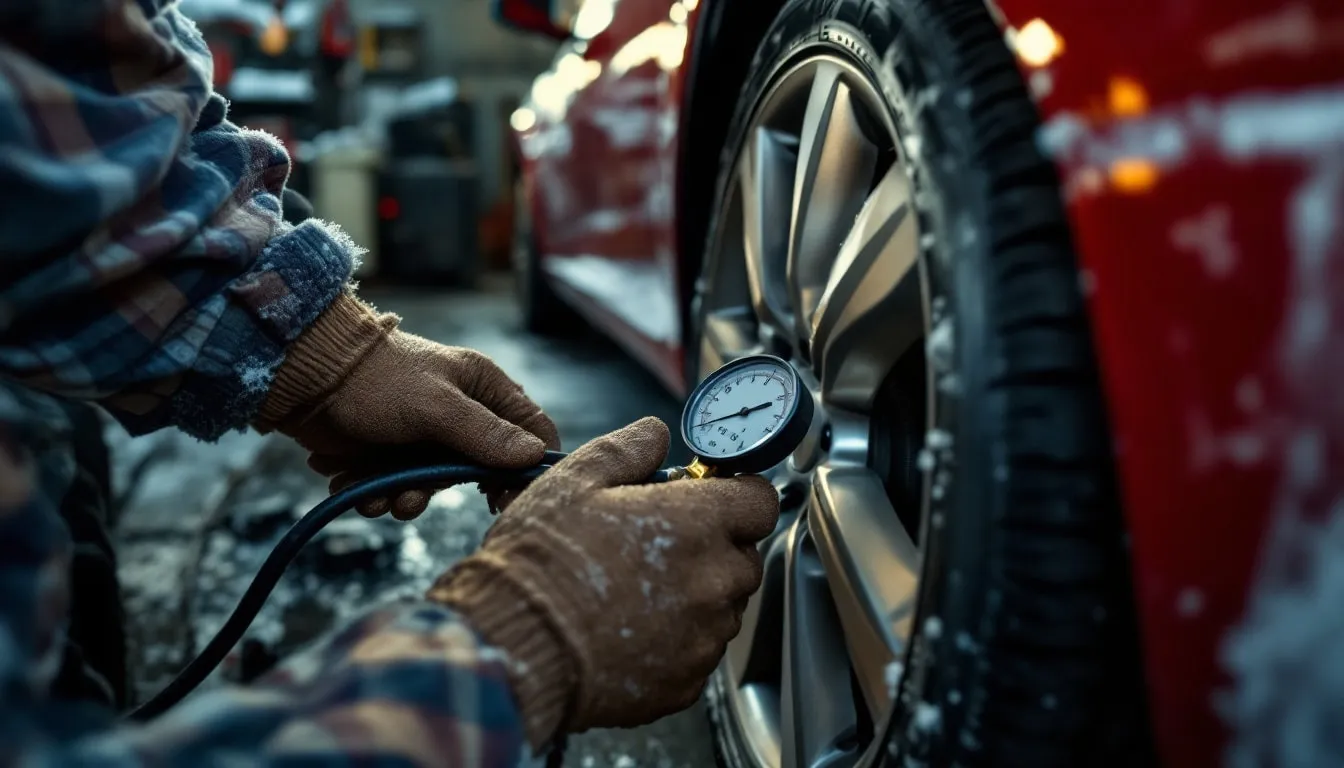
The TPMS light often appears on the first cold morning of the season, but “the weather did it” is not a diagnosis. Tire pressure changes with air temperature, roughly one PSI for every ten-degree Fahrenheit change, so a tire that was already near its minimum can cross the warning threshold overnight. That same tire may also have a slow puncture, a leaking valve stem, or corrosion at the wheel bead. The correct response is to measure, set the specified pressure, and watch what happens next.
Measure before the drive warms the tires
Use a dependable gauge before the car has been driven for several hours. Check every tire, including the spare if the vehicle monitors it, and use the cold-pressure figure on the driver-door placard. The maximum molded into the tire sidewall is not the vehicle’s target pressure. Record each reading. A simple note such as “left rear 27, others 32” makes a slow-loss pattern much easier to recognize on the next cold morning. Recheck the tires after setting them properly instead of relying on the warning light alone to tell you whether the job is finished.
A single low tire deserves a leak check
If one tire is materially lower than the others, inspect it for a screw or nail, a cut, a sidewall bubble, and damage around the valve stem. Do not pull out an object that is holding air in the tire. A tire that needs air every few days or weeks is asking for a professional leak inspection, even if it is old enough for seasonal pressure changes to be plausible. Shops can test the tread area, wheel bead, valve hardware, and wheel condition. A valve cap is not a pressure seal, but keeping one fitted helps protect the valve from road grit and moisture.
Steady and flashing lights are different messages
A steady TPMS light usually means the system has detected one or more tires below its threshold. Correct pressures first, then follow the vehicle’s reset or drive-cycle procedure if one is specified. A light that flashes for a period after startup and then stays on can indicate a monitoring-system problem, such as a sensor battery, receiver, or programming concern. The system fault does not make tire pressure irrelevant: verify pressure manually because a fault may prevent the car from warning you accurately about the next low tire.
Do not force the lamp off
Overinflating the tires to make a warning disappear reduces the contact patch and can produce an uncomfortable ride and uneven wear. Sealant is also not a universal cold-weather remedy; some products can complicate tire repair and sensor service. When the readings are correct but the lamp returns, keep the measurement notes and ask for an inspection. Lloyd’s can help Sandston, Highland Springs, Varina, Henrico, and Richmond drivers distinguish ordinary temperature-related pressure movement from a puncture, wheel leak, or TPMS-system fault.
Make pressure checks part of the season
Check pressure whenever there is a major seasonal temperature swing, before a loaded trip, and after a TPMS warning. A monthly reminder is a reasonable baseline for many drivers. Do not judge a tire by appearance; radial tires can look normal while they are meaningfully low. If the warning appeared after a tire rotation or new tire installation, tell the shop because some vehicles require a sensor relearn or position update. The owner’s manual describes the TPMS behavior for the exact vehicle, including whether a spare is monitored and how the reset procedure works.
Why cold weather exposes marginal tires
Air molecules move more slowly in lower temperatures, so the same tire volume produces less pressure. The change is predictable, but the light can still reveal a tire that was already underinflated during warmer weather. Correcting the measurement improves handling, tread life, and load capacity. It is not just an electronic nuisance. When in doubt, use a manual gauge and the placard rather than guessing from the tire’s shape or a dashboard message.
Recheck after the temperature settles
Pressure can change again when a cold front arrives after you filled the tires on a warmer afternoon. Keep the same gauge in the glove box and compare readings at roughly the same cold condition, rather than chasing the number after highway driving. If one position repeatedly falls farther than the others, mark that tire’s location in your notes. The pattern is more useful to a tire technician than a dashboard light that has already turned itself off.
If you need this done