Virginia winter prep: five things, one afternoon
Virginia winters are mild until they aren't. The five checks worth doing in October, and why battery and tires matter more here than snow tires ever will.
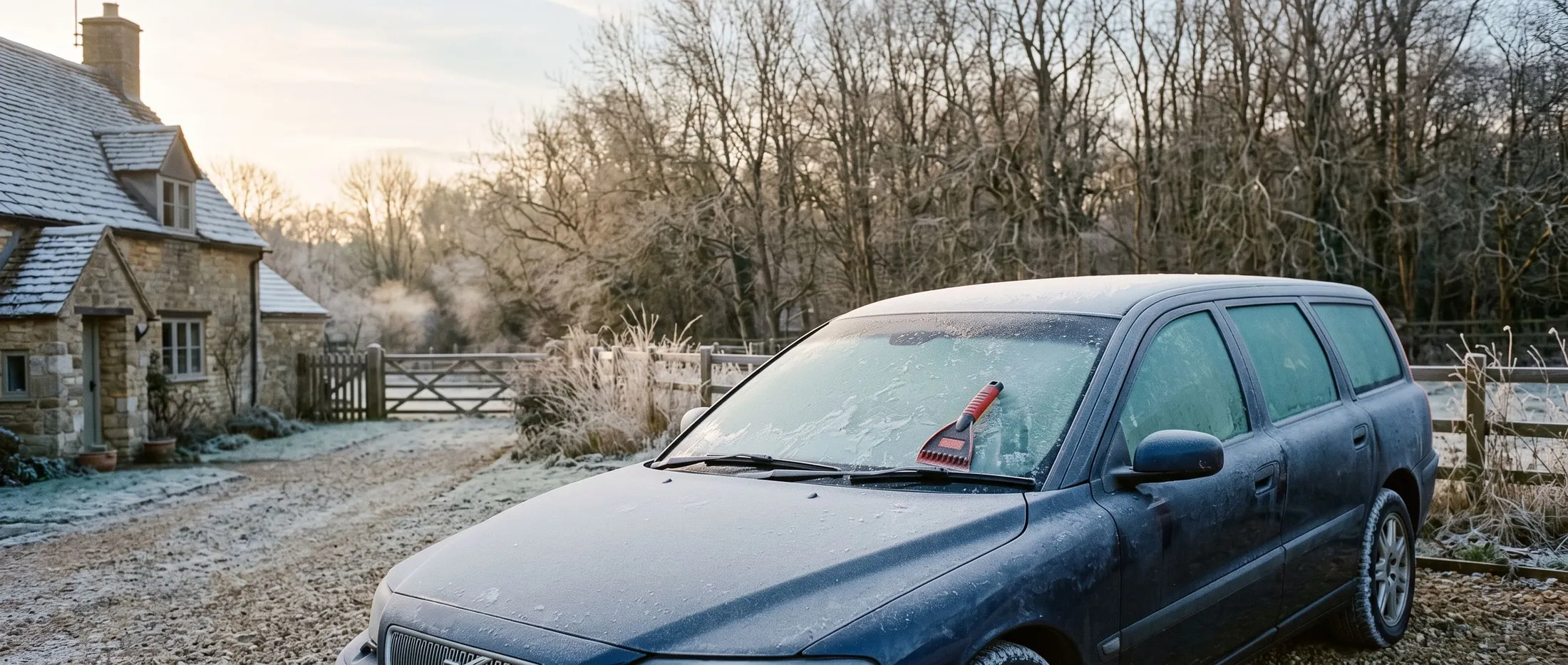
Central Virginia winters are mild right up until the morning they aren’t, and the failures they cause are boringly predictable. Five things, done in October, prevent almost all of them.
1. Battery — the big one
This is the failure. Cold thickens your oil so the starter needs more current, and simultaneously slows the chemistry in the battery so it delivers less. A battery already weakened by a Virginia summer runs out of margin on the first genuinely cold morning.
Get a load test, not a voltage reading. Voltage sitting still tells you almost nothing. Free with any service here, and it takes two minutes.
If yours is past three years old, this is the single highest-value item on the page. Why heat is what actually kills them.
2. Tires — tread, not snow tires
You do not need snow tires in Sandston. What you need is tread depth, because the risk here is rain and the occasional ice event, not sustained snow.
Tire pressure also drops roughly 1 psi for every 10°F the temperature falls, so the set that was correct in September is genuinely low in December — which is why every TPMS light in Henrico County comes on during the same cold snap. Check them cold against the door jamb figure. How to read your own tread.
3. Coolant — it’s antifreeze for a reason
Coolant does two jobs, and the one it’s named for is the winter one. Weak or old coolant can freeze, and freezing coolant expands, and expanding coolant cracks blocks and heads.
We test the freeze point rather than guessing from the colour. It takes seconds. While we’re there we check the hoses — cold makes old rubber brittle, which is why hoses fail on cold mornings rather than warm ones.
4. Wipers, washer fluid and the defroster
Winter wipers do more work than summer wipers, on dirtier glass. If they chatter or streak, replace them.
Use washer fluid rated for freezing, not the summer blue stuff — frozen washer fluid in the lines is a cracked reservoir and a pump.
And check that the defroster actually clears the windshield. A defroster that’s gone weak usually means a stuck-open thermostat, low coolant, a plugged heater core or a blend door actuator, and the price gap between those is wide enough to be worth diagnosing rather than guessing. A windshield you can’t see through is also a safety inspection problem.
5. Lights
It’s dark at five o’clock. Walk around the car with the lights on, and have somebody stand behind while you press the brake pedal.
Hazy, yellowed headlight lenses cut real light output — restoration is inexpensive and the difference at night is not subtle.
What to keep in the car
An ice scraper. A blanket. A flashlight. Jumper cables or a jump pack. Water. Your insurance and roadside numbers written down somewhere that isn’t a phone that might be dead.
The Virginia-specific part
We get one or two genuine ice events a year and a lot of cold rain. That combination — plus roads that get salted and brined — means two things worth knowing.
Salt and brine accelerate rust, especially on brake lines, fuel lines and exhaust systems. A wash including the underbody after a salt event is genuinely worth doing.
Black ice on bridges and overpasses forms before it forms on the road, because a bridge loses heat from underneath too. The I-64 overpasses around Sandston are exactly this kind of surface.
Drop it in for a winter check-over — battery, tires, coolant, wipers, lights, and a look underneath. Call (804) 737-2828 or tell us you’re coming.